Chapter 01
01. History is the advantage.
A meme becomes more interesting when people have something to remember.
The first encounter creates curiosity. A later encounter creates recognition. Over time, the image picks up stories, variations, and the small pleasure of being in on the joke. That accumulated meaning gives people a reason to keep bringing it back.
History also gives a community a starting point. Newcomers can discover an origin. Early participants can retell it. Creators can build on it. A simple image becomes a reference that connects people who encountered it at different moments.
That shared past is difficult to manufacture on demand. A new campaign can introduce an image today, but it cannot give an audience a genuine memory of discovering it years earlier. When a familiar character returns, people bring their own experiences to the encounter. The story arrives with context already attached.
Age alone does not make a meme important. What matters is whether its history offers useful material for the next interpretation. Fred’s history does: the original premise contains a specific future moment, giving people a clear connection between what they saw then and what they can create now.
That is why Fred deserves a closer look. The polar bear carries a premise that has had more than three years to become familiar: a meme supposedly sent from November 2026. Today, that premise has a second layer. The future date is on the calendar in front of us.
The $FRED thesis begins with that meeting of memory and timing. An existing character, a story people can explain in one sentence, and a moment that makes the old story relevant again.
The internet was given a date.
The calendar did the rest.
Chapter 02
02. A meme from the future.
Know Your Meme traces the first known post to TikTok user @gmd_arahis on March 27, 2023. An eerie polar bear appeared in a snowy night scene with a Russian caption translated as:[1]
“This is a November meme from 2026, you won’t understand yet.”
It is an unusually efficient setup. The strange image provides a character; the future date provides a question. Why November? Why this bear? What are we supposed to understand? Leaving those questions open makes the audience part of the joke.
The timeline below separates the documented history from the opportunity we see today. Select a chapter to follow the bear’s journey.
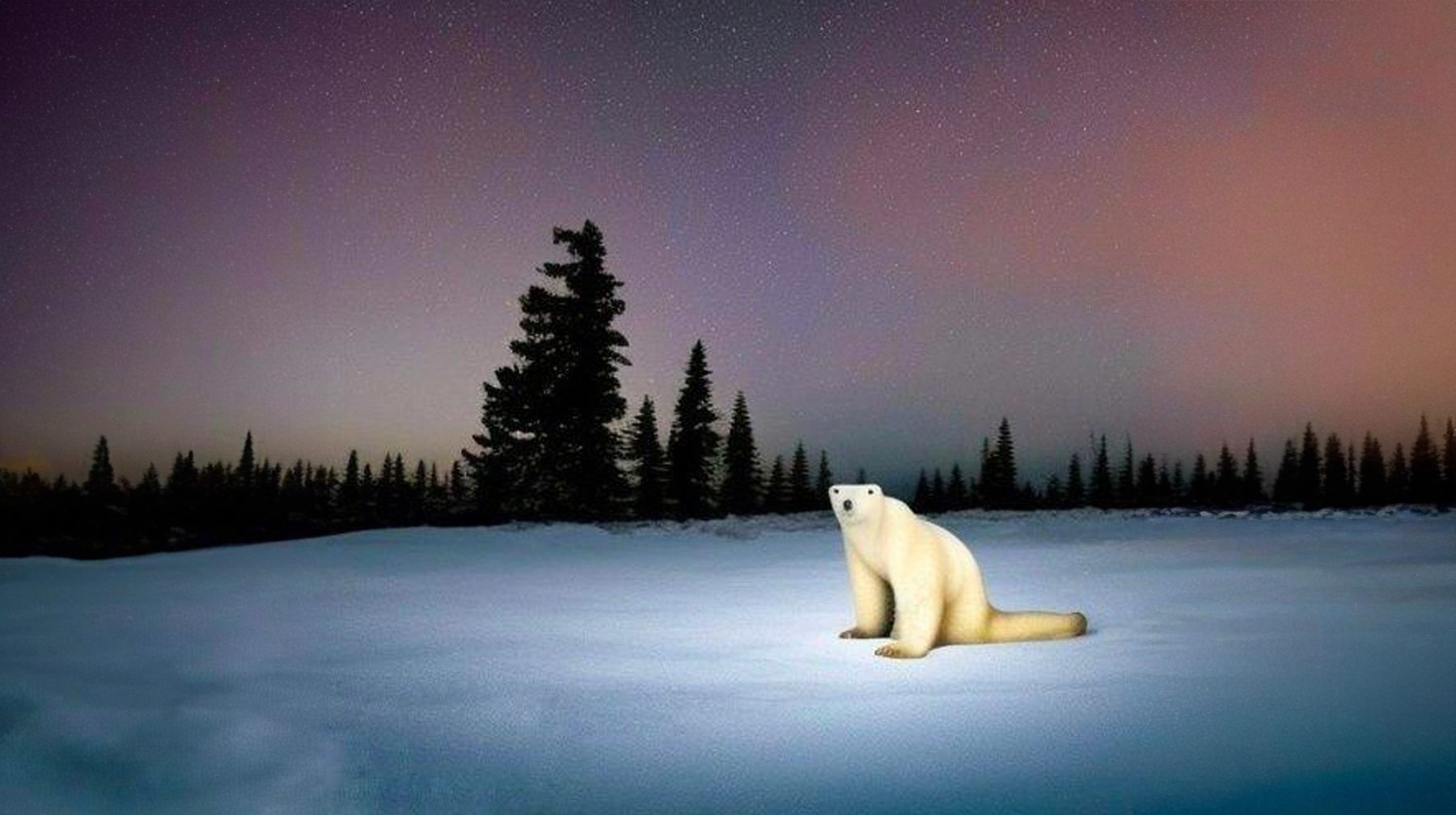
01 / The beginning
A bear. A caption. A date.
The first known TikTok post introduces an uncanny polar bear and places it in November 2026. The mystery is the invitation: remember this, even if it makes no sense yet.[1]
A naming note: the archives call the meme “Polar Bear 2026.” This thesis uses Fred, the name associated with the $FRED community. The meme’s history and the token’s history are separate.
Chapter 03
03. November changes the context.
A date inside a meme is a reason to revisit it. A date arriving is a reason to make something new.
For most of its history, the bear belonged to an imagined future. November 2026 changes how the audience can use it. An old screenshot can become a callback. A calendar can become a punchline. Someone who remembers the original can introduce it to someone seeing it for the first time.
The strongest part of this setup is its simplicity. A new viewer needs very little explanation: people shared this bear in 2023 and said it belonged to this month. The gap between those two dates supplies the story. The viewer can understand the premise and immediately contribute their own version.
A shared date can also help independent creators arrive at the same subject without a central organizer. An explainer could revisit the original post; an editor could turn the calendar into a visual joke; a musician could reinterpret the bear’s return. Each approach can add something different while pointing back to the same recognizable premise.
That combination gives the November narrative a useful shape: an accessible entry point with room for elaboration. People can share a simple callback or spend time exploring the lore. The story can accommodate both a passing encounter and deeper involvement, which is valuable when audiences discover it through different formats.
The 2026 singing-bear revival already showed another way into the lore. Know Your Meme documented more than 980,000 views in two weeks on the August 28 clip, followed by covers and calendar-themed edits in September.[2] The creative lesson is that the premise can travel through sound, performance, and everyday objects.
A shared moment. Thousands of possible versions.
As of this November 8 edition, much of the month remains. That creates room for new interpretations. Whether attention expands still depends on what people actually make and share.
November 2026
Edition
That distinction makes the argument more durable. We can see the narrative opportunity without pretending to know when attention will peak. November provides the occasion. The audience decides its scale.
Chapter 04
04. Fred is built to travel.
To become a defining internet character, a meme needs to remain recognizable while giving creators room to change it. Fred’s appeal is the combination of a distinctive image, an unfinished story, and a premise that works in several formats.
- Recognizable at a glance.
- The uncanny bear has a visual identity that can anchor a thumbnail, an edit, or a reaction. Familiarity makes the next encounter easier to connect to the last.
- Explainable in a sentence.
- A polar bear from 2023 told the internet to wait for November 2026. That compact premise can travel between languages and communities without a long introduction.
- Open to interpretation.
- Fred can be strange, ominous, absurd, nostalgic, or celebratory. That flexibility gives creators different emotional reasons to bring the character into their own work.
There are also concrete examples of people adapting the wider Polar Bear 2026 meme for games. A Friday Night Funkin’ fan mod is documented under the November 2026 theme. The Minecraft mod The Dweller From 2026 explicitly names the meme as its inspiration, while a Roblox creator described building a game around it.[3][4][5]
These are fan creations, with no implied official endorsement or token affiliation. Their relevance is creative effort: someone saw enough in this character to turn it into an experience. A player can encounter the bear through a game before ever seeing the original post.
That is the path toward broader cultural relevance. Different audiences can encounter different versions and still recognize the same underlying character. If enough creators keep finding new uses for Fred, the bear could become a recurring presence across the internet. The opportunity is meaningful; the title of “main internet character” has to be earned through continued participation.
A defining character also gives people a way to express something beyond the original joke. Fred could stand for anticipation, a strange prediction finally coming due, or the absurd feeling that the internet remembered something everyone else forgot. Those are creative directions rather than established meanings. Their value is that each gives a new creator a reason to use the bear in a different situation.
Chapter 05
05. The $FRED thesis.
The compelling case for $FRED is that a recognizable story could become a community people choose to join.
A memecoin gives a group a shared symbol, a public identity, and a way to organize around a character. Its cultural appeal is strongest when people want to take part in the surrounding world: making edits, explaining the lore, inventing inside jokes, and introducing the character to new audiences.
Fred offers unusually clear material for that kind of participation. There is an origin to point to, a visual identity to build around, and a timely premise that can be communicated immediately. A community can begin by telling a story that already exists outside its own channels.
- Stage 1
Recognition
“I remember that bear.”
- Stage 2
Participation
“I can make my own version.”
- Stage 3
Belonging
“I want to be part of this.”
The important work happens between those stages. Recognition creates an opening, but people need a reason to stay. A healthy creative community gives them one: good material to remix, useful archives, welcoming discussion, and a sense that their contributions can become part of the story.
In that setting, each new edit can do more than repeat a symbol. It can teach the lore, add a new reference, or carry the character into another community. The library of things people can share grows. So does the number of ways someone can first meet Fred.
A shared identity can make participation easier.
A consistent name and ticker can help people find one another around an otherwise scattered meme. A viewer who enjoys an edit can search for more. An artist can discover an audience already interested in the character. A newcomer can find an explanation of the original premise. If the community makes those connections useful, its identity becomes part of how the story circulates.
There is practical work behind that possibility. A Fred community could preserve the original references, credit creators, organize accessible remix material, and welcome interpretations from people who do not trade tokens. These are opportunities for the community to pursue. They would give participation substance and make the character easier for the next person to understand and use.
This creates a clearer standard for what makes the memecoin idea attractive. People can gather around a shared cultural project and contribute to an identity they enjoy. The token may become one expression of that participation. Its strongest cultural foundation would be a community whose work remains interesting to people arriving for the meme itself.
This is the most persuasive argument for the memecoin’s potential: $FRED could become a recognizable gathering point for people who want to carry the character forward. That outcome would depend on creators, community quality, and whether the wider meme audience actually embraces the name and token.
The link between cultural attention and token demand remains an assumption to test. A popular meme can thrive without benefiting a particular coin, and a ticker does not confer ownership of the meme. The case becomes stronger when participation around Fred is visible, voluntary, and sustained beyond trading conversations.
For that reason, the most useful question is how much culture the community can create around the character. A price target cannot answer it. A growing body of original work, repeat contributors, and recognition beyond crypto circles can.
Chapter 06
06. November can be a beginning.
Every date-based story faces the same question: what happens after the date? For Fred, the answer will come from the character’s next uses. November can leave behind new jokes, memorable edits, recurring formats, and people who now recognize the bear.
The original mystery also offers material for a second chapter. After spending years asking what we would understand in November 2026, creators can play with what actually happened, what the bear supposedly knew, and how the internet reacted. The arrival itself can become part of the lore.
A lasting character needs fresh reasons to appear. Fred’s flexible tone gives the community options: surreal reaction images, game-inspired stories, seasonal callbacks, and new interpretations of the “meme from the future” idea. Each would need to succeed on its own creative merits.
The date can also become an anniversary. A future November callback would carry a different meaning: remembering the month everyone once waited for. That possibility gives the original setup a way to remain part of the character’s identity while leaving space for the story to move forward. An anniversary becomes useful only when people still care enough to return.
The long-term case rests on that adaptability. If people keep choosing Fred when the original calendar hook is no longer urgent, November will have helped introduce a character with a life of his own. That is the larger ambition behind this thesis.
Chapter 07
07. What would prove the thesis?
A convincing thesis should explain what would make it stronger—and what would make us reconsider. For Fred, the most useful signals come from people’s behavior.
| The question | Strengthens the case | Weakens the case |
|---|---|---|
| Are creators building? | Original edits, fan art, and new formats from different contributors. | A small group repeatedly posting the same promotional material. |
| Is the audience expanding? | People discover and use Fred across distinct communities. | Activity remains concentrated inside token-trading channels. |
| Is identity connecting? | People independently associate the character and community with Fred. | The meme grows while the name and token stay disconnected. |
| Does the character endure? | Participation continues after November’s initial novelty fades. | Interest disappears when the calendar hook passes. |
These tests keep the argument grounded. Historical view counts show that the meme has reached people before; they do not establish today’s momentum. New activity matters most when it adds original work and brings people back.
The same discipline applies to the token. Meme history does not establish contract safety, liquidity quality, holder distribution, or a future valuation. Those require separate checks. Memecoins are highly speculative, and the capital committed to one can be lost entirely.
The optimistic case remains clear: Fred has an existing story, an immediate cultural hook, and room for creative expansion. Sustained contribution is what would turn that opportunity into a stronger thesis.